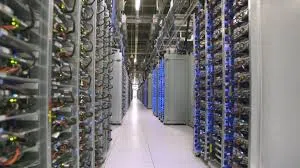
CBS News file photo
(North Dakota Monitor) – Worries over how adding new data centers in the state could impact the electric bills of residents and strain local water systems are high, the latest North Dakota Poll has found.
When asked how concerned they were about data centers increasing electricity bills, 76% expressed concern, with 49% saying they were very concerned.
The highest levels of concern were in Fargo and Cass County, where 54% said they were very concerned.
Water use is also high on the list of concerns, with 76% worried that data center water use could strain local water systems, and with 45% of respondents saying they were very concerned.
Asked whether they were more concerned about the water and electricity use of AI data centers or traditional data centers, 42% said they were more concerned about AI data centers.
“I thought it was pretty stark that over three in four respondents have concerns about the electrical rates and the water usage,” said State Rep. Zachary Ista, D-Grand Forks.
Ista noted that the concerns over risks were higher than optimism about the potential for tax revenue and job creation.
The poll found that 19% feel data centers are important for job creation and 23% said they were very important for local tax revenue.
The poll, commissioned by the North Dakota News Cooperative as part of a special report – The Data Divide – found 45% of respondents opposing AI data center development statewide, compared to 35% who support development and another 20% who were undecided.
Arik Spencer, CEO of the Greater North Dakota Chamber representing businesses across the state, said questions about water and electricity deserve practical regulation.
“By encouraging new technologies, planning for infrastructure needs, and protecting reliable, affordable service, we can make data center investment work for our state,” Spencer said. “Perceptions are important, it’s time to talk about facts and the impacts.”
Josh Kramer, executive vice president and general manager of the North Dakota Association of Rural Electric Cooperatives, said that while costs for electricity are rising nationally, it’s not purely the fault of data centers.
A wide range of factors – aging grid, higher costs for equipment and labor – contribute to the overall increase in electricity rates, he and other electrical utility providers say.
Kramer said it is important for those in the electricity industry to explain what they’re doing to insulate members and customers from rising costs.
One way is implementing a system where large loads that are added, whether they’re data centers or other industrial developments, don’t have an outsized impact.
“When it comes to the electric cooperatives, we need to make sure they know they’re not paying the costs of data centers coming online,” Kramer said. “(Large load users) are going to pay what it takes to build the generation and the infrastructure to do so.”
Mac McLennan, president and CEO of Minnkota Power Cooperative, said the company is ensuring that data centers pay their own way.
“They have to physically build the infrastructure to serve themselves,” McLennan said. “The idea that we’re putting assets on the balance sheet, paid for by the rest, that would serve a data center, we’re not. They put up all the capital for that.”
McLennan said data centers, like other large industrial energy consumers, do have impacts on the grid as a whole, but to truly understand those impacts is extremely complex.
He also said there’s an argument to be made that if structured well, data centers can have a net positive impact on other members and consumers in the region, particularly for consuming underutilized natural gas.
Robert Mayo, an economist and researcher at North Dakota State University’s Sheila and Robert Challey Institute for Global Innovation and Growth, said North Dakota is in a unique position since as oil wells mature, they give off more natural gas.
Since only a small amount of gas can be flared, the rest is required to be captured and utilized. Failure to utilize the natural gas slows oil production, leading to what some refer to as a “gas wall” or a bottleneck where gas production outpaces pipeline and processing capacity.
Representatives of Otter Tail Power Company said in a statement that the company approaches data centers as it would other potential customers with significant electricity needs and evaluates what infrastructure is needed, the cost, and how to protect existing customers.
“Large energy consumers, like data centers, are responsible for the costs required to serve them,” Otter Tail spokesperson Stephanie Hoff said in the statement.
State Sen. David Hogue, R-Minot, said it appears most utilities operating in the state are putting into place policies that insulate consumers from costs of data centers and didn’t think any state legislation was needed to enforce that.
“Unless they’re just being philanthropic, they’re not going to provide power to a new high-power user at below their actual costs, or subsidize them with existing infrastructure,” Hogue said.
The North Dakota Poll was conducted by Mason-Dixon Polling & Strategy, Inc. of Jacksonville, Florida, from Oct. 19 through Oct. 21, 2026. A total of 625 North Dakota adult residents were interviewed statewide by telephone as part of the survey.
Among respondents, 40% identified as Republican, 39% as independent, and 21% as Democrat, with an even representation among age groups and genders.
Geographically, 25% were from Fargo and Cass County, 25% from other parts of eastern North Dakota, 19% from the Bismarck-Mandan region, and 31% from western North Dakota.
The North Dakota Poll, sponsored by the North Dakota News Cooperative, is the only regular, nonpartisan statewide survey of eligible North Dakota voters and consumers.




Comments